EMBEDDED CONTROL · PCB · MOTOR DRIVE
STM32G431 Based 3-Channel Brushed DC Motor Driver
A single-motor control prototype was tested for a RoboCup mobile robot, followed by an STM32G431 PCB design for three motors.
Why this board?
The off-the-shelf controller on the RoboCup Middle Size League robot handled two motors at a time. This project began with a practical question: could one board cover all three wheels while leaving the control firmware open to change?
First, one motor
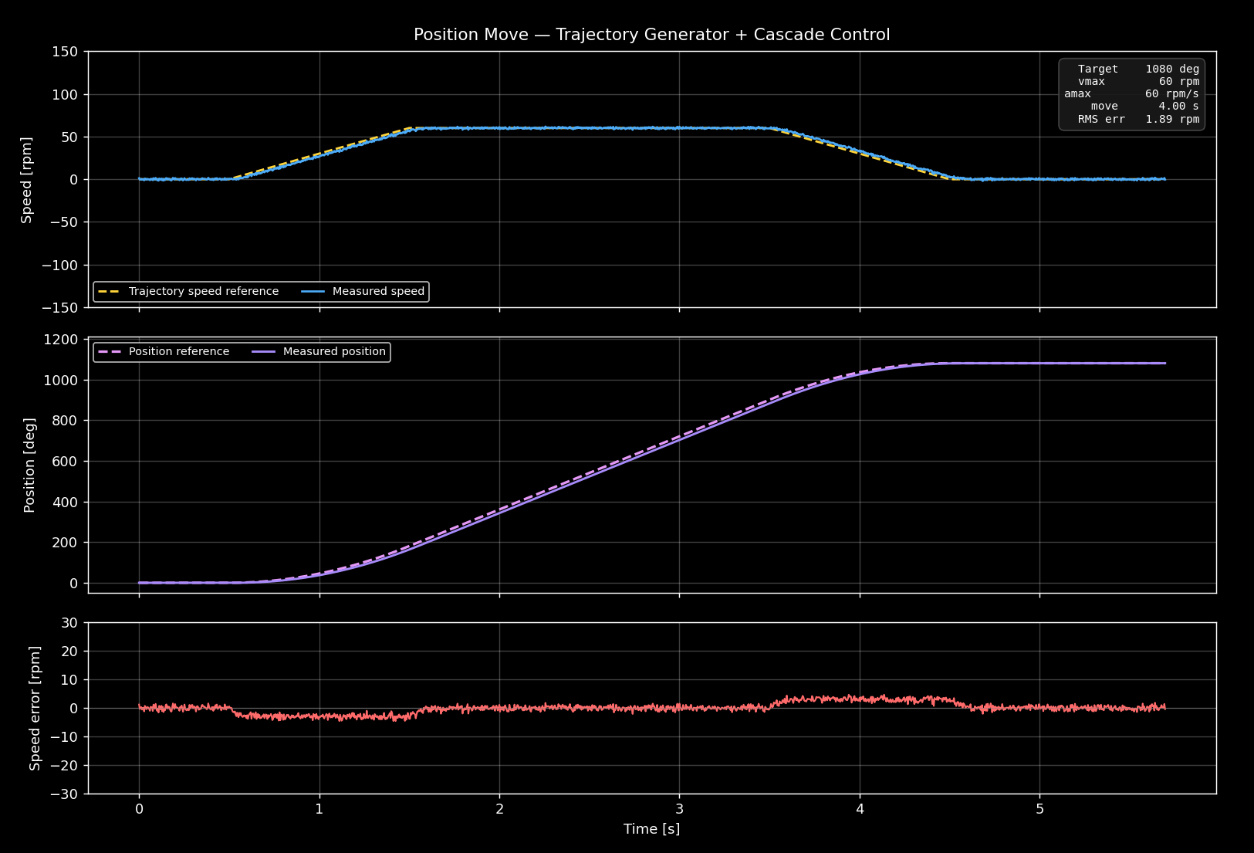
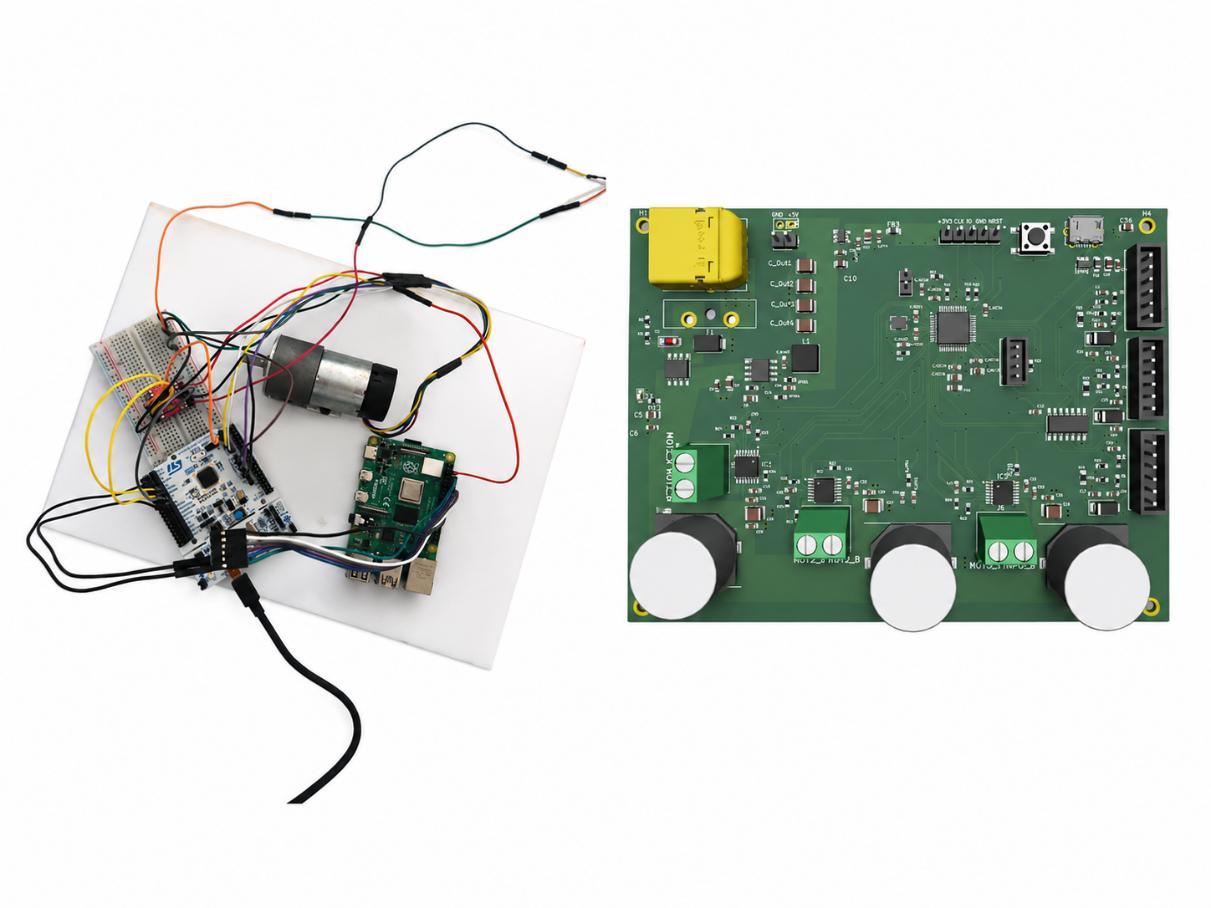
Control firmware was tested with an STM32 NUCLEO-F411RE, a TB6612FNG driver, and one encoder-equipped DC motor. A Raspberry Pi sent UART commands and logged telemetry. The velocity loop ran at 1 kHz and the position loop at 100 Hz; the response to a 60 rpm step reached its target in roughly 150 ms in prototype tests.
The three-channel design
The next stage was a two-layer KiCad PCB around an STM32G431CBT6 and three DRV8874 drivers. The design brings together a 24 V input, three encoder interfaces, IPROPI current feedback, USB/UART connections, and input protection.
Where it stands
The single-motor prototype ran on the bench. The three-channel schematic and layout were completed, and ERC/DRC checks passed. The board had not been manufactured when the report was finished, so simultaneous three-motor operation, current sensing, temperature, and EMI behavior still need bench validation.
Congress Presentation
The work was presented at SAVTEK 2026, the 12th Defense Technologies Congress.